





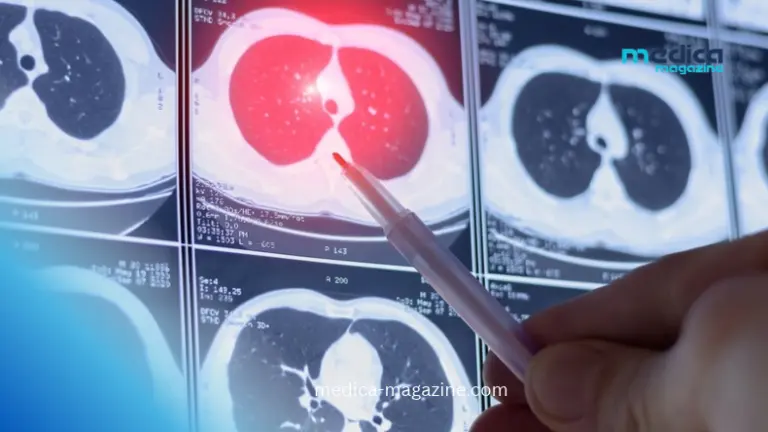
Le cancer du poumon reste aujourd’hui le plus meurtrier au monde. Il cause vingt pour cent des décès liés aux cancers. Pourtant, une révolution silencieuse s’opère dans les salles de radiologie. La détection précoce change la donne.
Un nouveau logiciel basé sur l’intelligence artificielle promet de transformer cette réalité sombre en espoir concret. Median Technologies vient de franchir une étape décisive. L’entreprise française a signé un partenariat stratégique majeur avec Canon Medical Systems Corporation par l’intermédiaire de sa filiale Olea Medical. Cette alliance accélère la commercialisation d’eyonis LCS, un outil de dépistage innovant, aux États-Unis et en Europe.
Une alliance stratégique pour démocratiser le dépistage intelligent
Ce rapprochement entre Median Technologies et le géant japonais Canon représente bien plus qu’un simple accord commercial. Il constitue un levier puissant pour intégrer l’intelligence artificielle au cœur de la pratique clinique quotidienne. Olea Medical et Median Technologies uniront leurs forces pour distribuer eyonis LCS sur les marchés américains et européens. D’autres régions géographiques pourront rejoindre ce périmètre selon les accords futurs.
Canon dispose déjà d’une base installée massive. Ses systèmes d’imagerie par tomodensitométrie (TDM) équipent une grande partie des centres de radiologie en Occident. Or, l’imagerie TDM constitue précisément la modalité utilisée par eyonis LCS. Cette synergie technique facilite naturellement l’adoption du logiciel. Les radiologues n’auront pas besoin de changer leur matériel habituel. Ils bénéficieront simplement d’une couche d’intelligence supplémentaire directement intégrée à leur flux de travail existant.
Fredrik Brag, fondateur et PDG de Median Technologies, souligne l’importance de cette dynamique. Il explique que l’obtention récente de l’autorisation de la FDA américaine et du marquage CE européen permet désormais de se concentrer sur l’accélération de l’adoption. L’objectif consiste à positionner eyonis LCS comme le dispositif médical logiciel de référence pour le dépistage du cancer du poumon. Cette stratégie combine la vente directe avec un réseau de partenariats complémentaires. Le précédent accord avec Tempus AI illustre cette volonté de multiplier les canaux d’accès au marché.
LIRE AUSSI : Le premier lecteur de fertilité à domicile basé sur l’intelligence artificielle
Quand la technologie rencontre l’urgence sanitaire mondiale
La pertinence clinique de cette innovation repose sur un constat simple mais brutal. Le diagnostic précoce sauve des vies. Le dépistage par tomodensitométrie à faible dose offre la possibilité de détecter la maladie à un stade où un traitement curatif reste possible pour la majorité des patients. Jusqu’à présent, l’interprétation manuelle des images restait longue et sujette à la variabilité humaine. L’intelligence artificielle comble cette lacune.
Fayçal Djeridane, président d’Olea Medical, insiste sur cette conviction stratégique. Il affirme que la détection précoce à l’échelle de la population constitue le domaine où l’IA apporte le plus de valeur ajoutée aux patients. La question ne se pose plus de savoir s’il faut dépister. Elle concerne désormais la manière d’intégrer efficacement ce dépistage dans la routine hospitalière. Cela exige une technologie fiable, précise et parfaitement fluide pour le radiologue.
Eyonis LCS répond à cette exigence. Il s’agit du seul logiciel médical basé sur l’IA approuvé simultanément aux États-Unis et dans l’Union européenne pour cette indication spécifique. Olea Medical apporte la plateforme technique, l’intégration robuste et l’expertise clinique nécessaires pour déployer cette solution à grande échelle. Des millions de scanners peuvent ainsi devenir des outils de diagnostic vital instantané. Ensemble, les deux entreprises ambitionnent d’établir une nouvelle norme mondiale de soins.
LIRE AUSSI : Radiologie : l’intelligence artificielle donne enfin la parole aux images médicales
Une approche multicanale pour une adoption rapide
Median Technologies ne mise pas tout sur un seul partenaire. L’entreprise poursuit une stratégie de collaboration ouverte avec divers acteurs de la chaîne de valeur sanitaire. Cette approche non exclusive permet de toucher différents segments du marché. Des éditeurs de logiciels aux fournisseurs de systèmes PACS, en passant par les plateformes de données cliniques, chaque alliance vise à faciliter l’accès au dépistage.
Cette diversité de partenaires crée un écosystème résilient. Chaque collaborateur apporte des capacités distinctes. Tempus AI, par exemple, offre des compétences différentes de celles de Canon. Pourtant, tous convergent vers le même but. Ils souhaitent accélérer la sensibilisation des médecins et le déploiement technologique. Cette méthode favorise une croissance commerciale durable tout en répondant à un besoin médical non satisfait urgent.
L’impact potentiel sur la santé publique reste considérable. En améliorant la fiabilité du diagnostic et l’efficacité du processus de dépistage, eyonis LCS aide les cliniciens à agir plus vite. Il réduit les erreurs d’interprétation et standardise la qualité des analyses. Cette uniformisation profite directement aux patients qui bénéficient d’une prise en charge plus homogène, quel que soit leur lieu de soin.
L’expertise française au service de l’oncologie mondiale
Median Technologies s’impose comme un pionnier dans le domaine des logiciels innovants pour dispositifs médicaux. La société française exploite l’intelligence artificielle de pointe pour améliorer la précision des diagnostics précoces. Son offre s’articule autour de deux piliers principaux. iCRO assure l’analyse et la gestion d’images pour les essais cliniques en oncologie. Eyonis propose une suite logicielle basée sur l’apprentissage automatique intégrée à un dispositif médical.
Cette double compétence permet à l’entreprise de servir à la fois les industriels biopharmaceutiques et les cliniciens de terrain. Elle contribue à accélérer le développement de nouvelles thérapies tout en optimisant la prise en charge actuelle des patients. Cotée sur le marché Euronext Growth, Median Technologies possède déjà une présence internationale solide aux États-Unis et en Chine.
Olea Medical, en tant que filiale du groupe Canon, complète parfaitement cette offre. Spécialisée dans les solutions avancées de radiologie, l’entreprise fournit des outils d’analyse quantitative et d’aide à la décision clinique. Son expertise dans l’optimisation des flux de travail garantit que l’innovation technologique ne ralentit pas le praticien. Au contraire, elle libère du temps médical précieux pour se concentrer sur l’humain.
LIRE AUSSI : Comment l’intelligence artificielle révolutionne l’interprétation de l’ECG
Vers une généralisation du dépistage préventif
Les gouvernements et les systèmes de santé mondiaux accélèrent actuellement l’adoption des programmes de dépistage du cancer du poumon. Cette prise de conscience politique accompagne l’évolution technologique. L’arrivée d’outils validés comme eyonis LCS rend cette généralisation techniquement faisable et économiquement viable.
La collaboration entre Median Technologies et Canon Medical Systems marque donc un tournant. Elle transforme une innovation prometteuse en solution de santé publique accessible. En reliant la puissance de calcul de l’IA à la ubiquité des scanners TDM, ce partenariat offre une réponse concrète à l’un des défis majeurs de l’oncologie moderne. La détection précoce n’est plus une option réservée à quelques centres experts. Elle devient une réalité opérationnelle pour le plus grand nombre.
Cette avancée technologique redonne du pouvoir aux médecins et de l’espoir aux patients. Elle prouve que l’intelligence artificielle, lorsqu’elle est correctement intégrée et régulée, constitue un allié indispensable pour la médecine préventive. Le combat contre le cancer du poumon entre dans une nouvelle ère. Une ère où la technologie travaille discrètement en arrière-plan pour offrir aux soignants la certitude dont ils ont besoin pour agir au bon moment.
LIRE AUSSI : L’intelligence artificielle révolutionne la surveillance hospitalière
Lung Cancer: An AI-Based Screening Tool Heading to Market
Lung cancer remains the deadliest cancer worldwide. It causes twenty percent of all cancer-related deaths. Yet, a silent revolution is taking place in radiology departments. Early detection is changing the game. A new artificial intelligence-based software promises to transform this grim reality into concrete hope. Median Technologies has just taken a decisive step. The French company signed a major strategic partnership with Canon Medical Systems Corporation through its subsidiary Olea Medical. This alliance accelerates the commercialization of eyonis LCS, an innovative screening tool, in the United States and Europe.
A Strategic Alliance to Democratize Intelligent Screening
This rapprochement between Median Technologies and the Japanese giant Canon represents much more than a simple commercial agreement. It constitutes a powerful lever to integrate artificial intelligence into the heart of daily clinical practice. Olea Medical and Median Technologies will join forces to distribute eyonis LCS in the American and European markets. Other geographic regions may join this perimeter according to future agreements.
Canon already possesses a massive installed base. Its computed tomography (CT) imaging systems equip a large portion of radiology centers in the West. Moreover, CT imaging is precisely the modality used by eyonis LCS. This technical synergy naturally facilitates the software’s adoption. Radiologists will not need to change their usual equipment. They will simply benefit from an additional layer of intelligence directly integrated into their existing workflow.
Fredrik Brag, founder and CEO of Median Technologies, highlights the importance of this dynamic. He explains that obtaining recent authorization from the US FDA and the European CE mark now allows the company to focus on accelerating adoption. The goal consists of positioning eyonis LCS as the reference medical device software for lung cancer screening. This strategy combines direct sales with a network of complementary partnerships. The previous agreement with Tempus AI illustrates this willingness to multiply market access channels.
When Technology Meets Global Health Urgency
The clinical relevance of this innovation rests on a simple but brutal fact. Early diagnosis saves lives. Low-dose computed tomography screening offers the possibility of detecting the disease at a stage where curative treatment remains possible for most patients. Until now, manual interpretation of images remained lengthy and subject to human variability. Artificial intelligence fills this gap.
Fayçal Djeridane, President of Olea Medical, insists on this strategic conviction. He states that early detection at the population level is the area where AI brings the most added value to patients. The question is no longer whether to screen. It now concerns how to effectively integrate this screening into hospital routine. This requires reliable, precise technology that flows seamlessly for the radiologist.
Eyonis LCS meets this requirement. It is the only AI-based medical software approved simultaneously in the United States and the European Union for this specific indication. Olea Medical provides the technical platform, robust integration, and clinical expertise necessary to deploy this solution on a large scale. Millions of scanners can thus become tools for instant vital diagnosis. Together, the two companies aim to establish a new global standard of care.
A Multi-Channel Approach for Rapid Adoption
Median Technologies does not bet everything on a single partner. The company pursues an open collaboration strategy with various actors in the healthcare value chain. This non-exclusive approach allows reaching different market segments. From software publishers to PACS system providers, including clinical data platforms, each alliance aims to facilitate access to screening.
This diversity of partners creates a resilient ecosystem. Each collaborator brings distinct capabilities. Tempus AI, for example, offers different skills than Canon. Yet, all converge toward the same goal. They wish to accelerate physician awareness and technological deployment. This method favors sustainable commercial growth while addressing an urgent unmet medical need.
The potential impact on public health remains considerable. By improving diagnostic reliability and screening process efficiency, eyonis LCS helps clinicians act faster. It reduces interpretation errors and standardizes analysis quality. This uniformization directly benefits patients who receive more homogeneous care, regardless of their location.
French Expertise at the Service of Global Oncology
Median Technologies establishes itself as a pioneer in the field of innovative software for medical devices. The French company exploits cutting-edge artificial intelligence to improve the precision of early diagnoses. Its offer revolves around two main pillars. iCRO ensures image analysis and management for oncology clinical trials. Eyonis offers a software suite based on machine learning integrated into a medical device.
This dual competence allows the company to serve both biopharmaceutical industries and frontline clinicians. It contributes to accelerating the development of new therapies while optimizing current patient care. Listed on the Euronext Growth market, Median Technologies already has a solid international presence in the United States and China.
Olea Medical, as a subsidiary of the Canon group, perfectly complements this offer. Specialized in advanced radiology solutions, the company provides quantitative analysis tools and clinical decision support. Its expertise in workflow optimization guarantees that technological innovation does not slow down the practitioner. On the contrary, it frees up valuable medical time to focus on the human aspect.
Toward a Generalization of Preventive Screening
Governments and global health systems are currently accelerating the adoption of lung cancer screening programs. This political awareness accompanies technological evolution. The arrival of validated tools like eyonis LCS makes this generalization technically feasible and economically viable.
The collaboration between Median Technologies and Canon Medical Systems therefore marks a turning point. It transforms a promising innovation into an accessible public health solution. By linking the computing power of AI to the ubiquity of CT scanners, this partnership offers a concrete response to one of the major challenges of modern oncology. Early detection is no longer an option reserved for a few expert centers. It becomes an operational reality for the greatest number.
This technological advancement restores power to doctors and hope to patients. It proves that artificial intelligence, when properly integrated and regulated, constitutes an indispensable ally for preventive medicine. The fight against lung cancer enters a new era. An era where technology works discreetly in the background to offer caregivers the certainty they need to act at the right moment.